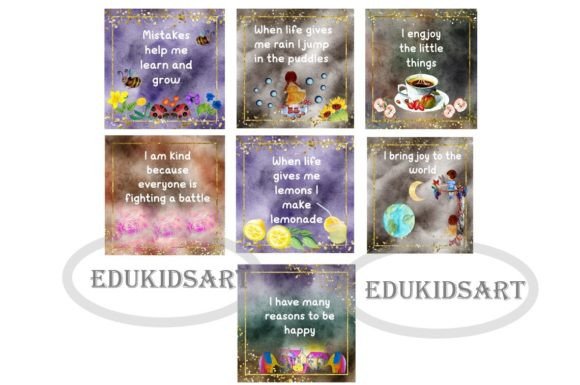
Positive Affirmations and Mindfulness: Cultivating Confidence in Children
In an era where digital distractions and academic pressures are increasingly prevalent, fostering a strong sense of self-worth in children has become a critical priority for parents and educators alike. The intersection of Positive Affirmations and Mindfulness offers a powerful, evidence-based approach to nurturing emotional resilience. By integrating these practices into daily routines, adults can help children develop the internal tools necessary to navigate challenges with confidence and calm. This article explores how visual aids, such as hand-painted watercolor illustrations, can serve as effective anchors for these psychological concepts, making them accessible and engaging for young minds.
Understanding the Core Concepts
To effectively implement these strategies, it is essential to understand what they entail. Mindfulness is the practice of maintaining a moment-by-moment awareness of our thoughts, feelings, bodily sensations, and surrounding environment. For children, this translates to learning how to pause, breathe, and observe their emotions without immediate reaction. Positive Affirmations and Mindfulness work synergistically; while mindfulness creates the mental space for observation, positive affirmations provide the constructive narrative that fills that space.
Positive affirmations are short, powerful statements that challenge negative or unhelpful thoughts. When repeated regularly, they help rewire the brain’s neural pathways, a concept known as neuroplasticity. Instead of internalizing criticism or failure, children learn to replace those thoughts with supportive self-talk. However, abstract concepts can be difficult for younger children to grasp. This is where visual reinforcement becomes invaluable. Combining verbal affirmations with calming, aesthetically pleasing imagery helps bridge the gap between cognitive understanding and emotional absorption.
Addressing Common Challenges in Child Development
Many children struggle with self-esteem issues, anxiety, or difficulty regulating emotions. In traditional classroom settings or busy households, there is often little time dedicated to explicit emotional education. Parents and teachers may find themselves reacting to behavioral outbursts rather than proactively building emotional skills. Furthermore, children with special needs, such as autism, or those in high-pressure educational environments may require more tangible, consistent reminders of their worth and capabilities.
The goal is not merely to suppress negative emotions but to equip children with a toolkit for self-regulation. Without proper resources, adults may struggle to convey these messages in a way that resonates with children. Standard text-based posters can feel sterile or instructional, lacking the warmth needed to create a safe emotional environment. This is where the integration of art and psychology becomes a game-changer. By using resources that align with Positive Affirmations and Mindfulness, caregivers can transform ordinary spaces into sanctuaries of support.
The Role of Visual Aids in Emotional Learning
Visual stimuli play a crucial role in how children process information. Hand-painted watercolor illustrations, with their soft edges and calming color palettes, evoke a sense of peace and nostalgia. Unlike sharp, digital graphics, watercolors mimic the organic flow of emotions, making them particularly suitable for mindfulness practices. When these illustrations are paired with positive quotes, they become more than just decoration; they become interactive tools for mental health.
For instance, a card featuring a gentle watercolor landscape with the text "I am calm and capable" serves as a visual cue. When a child feels overwhelmed, glancing at this image can trigger a conditioned response of relaxation. This method is highly effective in various educational philosophies, including Montessori and Waldorf education, which emphasize the importance of the environment as the "third teacher." In these settings, materials are designed to be beautiful, accessible, and meaningful, encouraging independent exploration and self-correction.
Practical Applications for Home and Classroom
Implementing Positive Affirmations and Mindfulness does not require a complete overhaul of your daily routine. Small, consistent changes yield the most significant results. Here are several practical ways to utilize affirmation cards and visual aids:
- Morning Routine Anchors: Place affirmation cards in visible areas such as the bathroom mirror or breakfast table. Encourage children to read one aloud each morning to set a positive tone for the day.
- Calm-Down Corners: Create a designated quiet space in the classroom or home. Stock this area with watercolor affirmation cards. When a child is upset, guide them to this space to select a card that resonates with their current need for comfort or strength.
- Interactive Journaling: Use the printable nature of these resources to allow children to color or decorate their own affirmation cards. This active participation deepens their connection to the message.
- Transition Tools: Use specific cards to signal transitions between activities. For example, a card saying "I am ready to learn" can help students shift focus from recess to classwork.
These applications are particularly beneficial for homeschooling families and those practicing attachment parenting, where the emotional bond between caregiver and child is central to the learning process. The flexibility of digital files allows for customization, ensuring that the messages remain relevant to the child’s developmental stage.
Tailoring Approaches for Diverse Needs
Different children respond to different stimuli. For children with autism or sensory processing sensitivities, the calming nature of watercolor art can be less overstimulating than bright, primary-colored graphics. The predictability of daily affirmations provides a sense of security and structure. Meanwhile, in a Montessori environment, the emphasis on independence means that having these cards accessible at the child’s eye level encourages self-directed emotional regulation.
Educators and parents should observe which affirmations resonate most with individual children. Some may respond better to affirmations focused on capability ("I can solve problems"), while others may need validation of their feelings ("It is okay to feel sad"). The versatility of having a diverse set of illustrations allows for a personalized approach to emotional development.
Long-Term Benefits and Outcomes
Consistent exposure to Positive Affirmations and Mindfulness fosters long-term psychological benefits. Children who practice positive self-talk are more likely to develop a growth mindset, viewing challenges as opportunities rather than threats. They become more resilient in the face of failure and more empathetic towards others. Moreover, the habit of mindfulness enhances focus and attention span, which can positively impact academic performance.
By investing in high-quality, visually appealing resources like hand-painted watercolor clip art, adults signal to children that their emotional well-being is valued. These tools are not just decorative; they are foundational elements of a supportive environment. Whether used as thank-you cards, classroom decorations, or personal reminders, these affirmations serve as constant, gentle reinforcements of self-worth.
Conclusion
Integrating Positive Affirmations and Mindfulness into the lives of children is a proactive step toward building a generation of emotionally intelligent, confident individuals. By leveraging the soothing power of watercolor art and the psychological strength of positive self-talk, parents and educators can create environments that nurture both the mind and the heart. The key lies in consistency, authenticity, and the thoughtful selection of resources that speak directly to the child’s experience. Start small, remain patient, and watch as these simple practices transform the emotional landscape of your home or classroom.