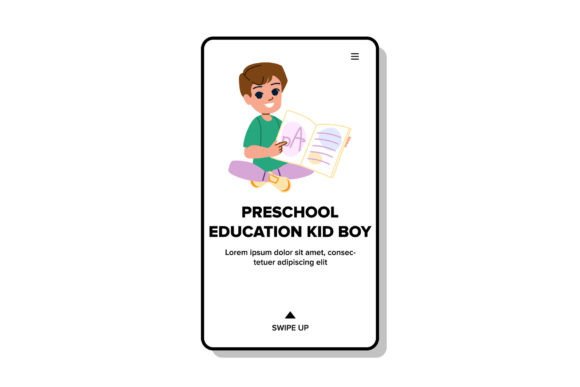
Visualizing Early Learning: The Strategic Value of Preschool Education Kid Boy Vector Assets
In the rapidly evolving landscape of digital content creation, the demand for high-quality, scalable, and emotionally resonant imagery has never been higher. For professionals in education technology, marketing, and graphic design, finding the right visual assets is not merely an aesthetic choice but a strategic business decision. One specific category that has gained significant traction is the Preschool Education Kid Boy Vector. This asset type represents more than just a cartoon character; it embodies a shift towards inclusive, clean, and versatile visual storytelling in early childhood education materials.
Understanding the utility and appeal of a preschool education kid boy vector requires looking beyond the surface level of cute illustrations. It involves recognizing how these digital assets fit into broader industry trends, streamline creative workflows, and meet the changing expectations of modern consumers and educators. Whether you are a freelancer designing a new app interface or an entrepreneur launching an educational brand, leveraging these resources can significantly enhance your project's impact.
The Evolution of Educational Imagery
Historically, educational materials relied heavily on photographic imagery or hand-drawn sketches. While photographs offer realism, they often lack the flexibility needed for diverse digital applications. Hand-drawn art, while charming, can be time-consuming to produce and difficult to scale without losing quality. The emergence of flat cartoon illustrations, particularly in vector format, has bridged this gap. A happy little character designed in vector format offers the best of both worlds: the approachability of illustration and the technical precision of digital graphics.
The term child fun is often associated with chaotic energy, but in design, it translates to structured playfulness. Modern vectors capture this essence through clean lines, bright but balanced color palettes, and expressive features. When we look at a cute student preschool education kid boy web flat cartoon illustration, we are seeing a carefully constructed image designed to engage young minds without overwhelming them. This balance is crucial in an era where attention spans are short, and visual clutter can hinder learning outcomes.
Why Professionals Are Choosing Vector Formats
The preference for vector graphics over raster images (like standard JPGs) is driven by practical necessity and technological advancement. Vectors are mathematical representations of shapes, meaning they can be scaled infinitely without pixelation. This is vital for creators who need to use the same asset across various mediums—from a small mobile app icon to a large classroom poster. The availability of formats like EPS and JPG ensures that these assets are accessible to users with different software capabilities and needs.
- Scalability: Maintain crisp edges at any size, essential for responsive web design.
- Editability: Colors and shapes can be modified to match brand guidelines easily.
- File Efficiency: Vector files are often smaller in size compared to high-resolution photos, improving load times.
- Versatility: Suitable for print, web, animation, and merchandise.
For marketers and entrepreneurs, this versatility translates to cost efficiency. Instead of commissioning multiple versions of an image for different platforms, a single preschool education kid boy vector can be adapted endlessly. This aligns with the lean operational models favored by startups and freelancers today.
Connecting with the Target Audience
The audience for early childhood education products is primarily parents and educators. These groups are increasingly discerning about the values represented in the materials they choose. There is a growing demand for imagery that reflects diversity, inclusivity, and positive emotional states. A school girl or a boy depicted in a learning environment should appear engaged, happy, and confident. The "flat" design style, characterized by minimalism and two-dimensional elements, has become popular because it feels modern, clean, and universally appealing.
When a parent sees a happy little child smiling while interacting with educational content, it triggers a positive emotional response. This connection is not accidental; it is the result of deliberate design choices. The cute student archetype serves as a relatable proxy for the user’s own child, fostering a sense of trust and familiarity with the brand or product. In this context, the vector is not just an image; it is a communication tool that conveys safety, joy, and educational value.
The Role of Gender and Inclusivity in Design
While this article focuses on the Preschool Education Kid Boy Vector, it is important to note that these assets are part of a larger ecosystem of inclusive design. Modern creators often purchase bundles that include boys, girls, and children of various backgrounds. The specific focus on a boy character in certain campaigns may target specific demographics or balance out existing content libraries. However, the underlying principle remains the same: representing childhood children in a way that feels authentic and respectful.
Designers are moving away from stereotypical gender roles in illustrations. A boy in a preschool setting might be shown reading, painting, or collaborating, rather than just playing with trucks. This subtle shift reflects broader societal changes and the expectations of modern parents who seek progressive educational tools. By using nuanced and thoughtful vector art, brands can align themselves with these values.
Integrating Vectors into Modern Workflows
For freelancers and creative agencies, integrating vector assets into their workflow can significantly reduce turnaround times. Instead of starting from scratch, designers can use a base preschool education kid boy vector and customize it to fit the project’s specific needs. This might involve changing the clothing colors to match a school’s uniform or adjusting the background elements to suit a particular theme.
- Selection: Choose a vector that matches the desired emotion and activity.
- Customization: Use software like Adobe Illustrator to tweak colors and details.
- Integration: Place the asset into the final layout, ensuring it complements text and other elements.
- Export: Save in the appropriate format (SVG for web, EPS for print) to maintain quality.
This streamlined process allows creators to focus more on strategy and messaging rather than getting bogged down in repetitive drawing tasks. It also enables rapid prototyping, which is essential in agile development environments where feedback loops are short and iterations are frequent.
Market Trends and Future Relevance
The market for digital educational resources is expanding globally. With the rise of e-learning platforms, homeschooling resources, and educational apps, the demand for high-quality visual content is surging. The Preschool Education Kid Boy Vector is well-positioned to meet this demand due to its adaptability and appeal. As technology continues to advance, we can expect these vectors to become even more interactive, potentially serving as bases for animated characters in augmented reality (AR) and virtual reality (VR) educational experiences.
Furthermore, the trend towards minimalism in web and app design favors flat illustrations. Complex, detailed images can distract from user interfaces, whereas simple, clean vectors guide the eye and enhance usability. This makes the cute student preschool education kid boy web flat cartoon illustration not just a trend, but a staple of modern digital design.
Entrepreneurs entering the ed-tech space should consider building a library of such assets early in their development process. Having a consistent visual language helps in brand recognition and user retention. Whether it is for a website banner, a social media post, or an in-app tutorial, these vectors provide a cohesive look that professionalizes the brand.
Conclusion
The Preschool Education Kid Boy Vector is more than a simple graphic element; it is a strategic asset that supports effective communication in the education sector. By combining aesthetic appeal with technical flexibility, these vectors meet the needs of modern creators, marketers, and educators. They reflect broader trends towards inclusivity, efficiency, and digital-first design. As the industry continues to evolve, the importance of high-quality, adaptable visual resources will only grow. For those looking to make an impact in the world of early childhood education, investing in and utilizing these vector assets is a smart, forward-looking move.
Whether you are downloading a preschool education kid boy vector in EPS format for print or using a JPG for quick web deployment, understanding its value helps you leverage it effectively. It is about creating a visual narrative that resonates with childhood children and their caregivers, fostering a love for learning through engaging and accessible design. In a crowded marketplace, clarity and connection are key, and these vectors provide exactly that.