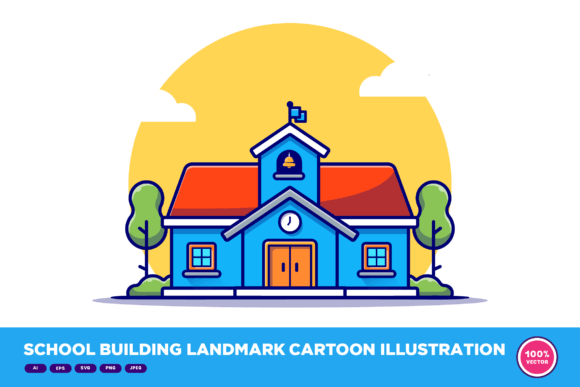
School Building Neon Sign. Modern Bright
The landscape of educational architecture is undergoing a subtle yet significant transformation, moving away from the somber brick-and-mortar aesthetic that dominated the 20th century toward something more vibrant, dynamic, and visually engaging. At the forefront of this shift is the School Building Neon Sign. Modern Bright, a design element that serves as more than just an identifier. It acts as a beacon of modernity, signaling to students, parents, and the community that the institution within is forward-thinking, creative, and alive. This evolution is not merely about adding color to a facade; it represents a strategic pivot in how educational spaces brand themselves in an increasingly digital and visual world.
When we examine the concept of a modern bright school building exterior with flap on roof, we are looking at a fusion of functional architecture and high-impact graphic design. The "flap" or architectural overhang often serves as the perfect canvas for these illuminated displays, protecting the signage from the elements while creating a dramatic shadow play during the day and a glowing focal point at night. This specific configuration allows for a night bright advertisement effect that transforms the school into a landmark, ensuring visibility and safety long after the final bell rings.
The Evolution of Educational Branding
Historically, schools were designed to project authority and permanence, often resulting in imposing, fortress-like structures. However, the needs of the 21st-century learner have changed. Today's students are digital natives who navigate a world saturated with visuals, motion graphics, and interactive interfaces. Consequently, the physical environment they inhabit must reflect the energy of their daily lives. The rise of the neon-style vector illustration in education marks a departure from traditional institutional branding toward a more approachable, community-centric identity.
This trend is particularly evident in how institutions are utilizing light. A School Building Neon Sign. Modern Bright is not just a logo; it is a statement of values. By adopting a neon aesthetic, schools align themselves with creativity, innovation, and the arts. This is especially relevant for institutions focusing on STEM, performing arts, or vocational training, where the curriculum itself is about creation and expression. The exterior becomes a billboard for the internal culture, inviting passersby to see the school not as a rigid system, but as a hub of activity and learning.
From Static Plaque to Dynamic Illumination
The transition from static metal plaques to illuminated neon signs reflects broader changes in user expectations and business needs. In the commercial sector, businesses have long understood that lighting is a critical component of branding and customer acquisition. Schools are now applying similar principles. A dark, unlit building can feel closed off or even unsafe at night. Conversely, a structure featuring a modern bright school building exterior with flap on roof creates a sense of welcome and transparency.
Furthermore, the technology behind these signs has evolved. While traditional glass tubing remains popular for its authentic glow, LED neon flex offers durability, energy efficiency, and the ability to create complex shapes without the fragility of glass. This technological advancement allows designers to incorporate intricate details, such as the vector illustration in neon style for education and castle, which might blend academic symbols with whimsical architectural motifs. These designs can range from stylized books and graduation caps to fantastical castle silhouettes that evoke the idea of knowledge as a kingdom to be explored.
Designing for the Night: Visibility and Atmosphere
The impact of a school building extends well beyond school hours. Community centers, sports facilities, and evening classes often utilize school grounds, making nighttime visibility crucial. A night bright advertisement strategy ensures that the school remains a visible part of the neighborhood ecosystem. This is not about aggressive commercial advertising but rather about maintaining a presence that fosters community pride and safety.
Consider the practical implications for urban planning and local security. Well-lit landmarks reduce the perception of danger in public spaces. When a school features a glowing sign that illuminates the entrance and surrounding walkways, it naturally increases foot traffic and surveillance by passersby. The "flap on roof" design element plays a role here as well; by projecting the light outward and downward, the signage acts as a secondary source of ambient lighting, enhancing the usability of the exterior space.
For educators and administrators, this shift requires a new perspective on facility management. It involves budgeting for energy-efficient lighting solutions and considering the maintenance of high-tech signage. However, the return on investment is measurable in terms of community engagement and brand perception. Parents choosing a school for their children are influenced by the overall "feel" of the campus. A modern, brightly lit exterior suggests a well-maintained, resource-rich environment where students are valued.
Integrating Vector Art into Physical Spaces
The intersection of digital design and physical infrastructure is where the most exciting innovations occur. The concept of a vector illustration in neon style for education and castle highlights how digital assets are being translated into tangible reality. Vector art, known for its scalability and clean lines, is ideal for neon fabrication because it translates perfectly into the continuous paths required for tubing or LED strips.
This approach allows for a level of customization that was previously difficult or cost-prohibitive. Schools can now commission unique designs that tell their specific story. For example, a school with a strong history might incorporate a stylized castle motif, representing the enduring nature of knowledge, rendered in electric blues and purples. Alternatively, a tech-focused academy might opt for circuit-board patterns or abstract geometric shapes in vibrant greens and oranges. These choices are not arbitrary; they are deliberate branding decisions that resonate with the target demographic.
Moreover, this integration supports the growing emphasis on STEAM (Science, Technology, Engineering, Arts, and Mathematics) education. By showcasing art and design prominently on the building's exterior, schools demonstrate that creativity is integral to the learning process. It sends a message to students that their artistic endeavors are valued and that the boundary between the classroom and the real world is porous.
Practical Implications for Stakeholders
For business owners and entrepreneurs involved in the education sector, understanding the power of visual identity is essential. Whether managing a private tutoring center, a trade school, or a university campus, the exterior presentation influences enrollment and reputation. The adoption of a School Building Neon Sign. Modern Bright strategy can differentiate an institution in a crowded market. It signals that the organization is current, adaptable, and willing to invest in its image.
Marketers and bloggers covering education trends should note that this is more than a passing fad. It is part of a larger movement toward experiential design in all sectors. People want environments that inspire them, and the use of light is a powerful tool for inspiration. When documenting these shifts, it is important to focus on the human element: how does this lighting make students feel? Does it make them proud to attend? Does it make parents feel confident?
For creators and designers, the challenge lies in balancing aesthetics with functionality. A sign must be beautiful, but it must also be legible, durable, and compliant with local zoning laws regarding light pollution. The "modern bright" aesthetic should not come at the expense of the surrounding environment. Thoughtful design ensures that the glow enhances the area rather than overwhelming it. This requires collaboration between architects, lighting designers, and educators to create a cohesive vision.
Future Trends in Educational Architecture
Looking ahead, we can expect to see even greater integration of smart technology in these signs. Imagine a modern bright school building exterior with flap on roof that changes colors based on the time of day, upcoming events, or even weather conditions. Smart LED systems could allow schools to display real-time information, turning the building into an interactive communication hub. This would further blur the lines between static architecture and dynamic media.
Additionally, sustainability will continue to drive material choices. As energy costs rise and environmental concerns grow, schools will prioritize solar-powered neon signs or those integrated with renewable energy sources. The goal is to maintain the visual impact of the School Building Neon Sign. Modern Bright while minimizing the carbon footprint. This alignment with green initiatives reinforces the school's commitment to responsible stewardship, a value that resonates deeply with modern families.
In conclusion, the shift toward illuminated, neon-style exteriors is a testament to the changing role of schools in society. They are no longer isolated fortresses of learning but vibrant community centers that thrive on visibility and connection. By embracing the vector illustration in neon style for education and castle and other modern design elements, educational institutions are crafting identities that are as bright and promising as the futures they aim to build for their students. This evolution is not just about looking good; it is about feeling good, belonging, and inspiring the next generation to shine.