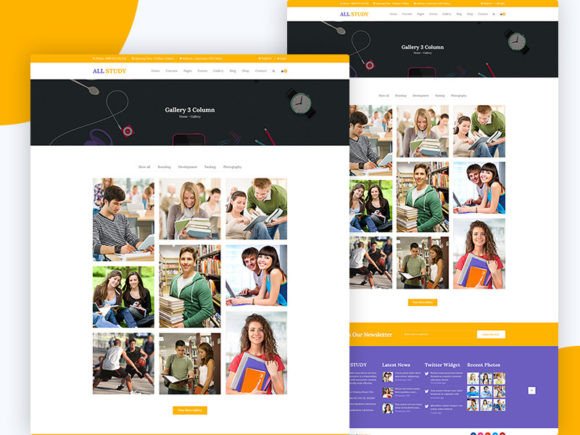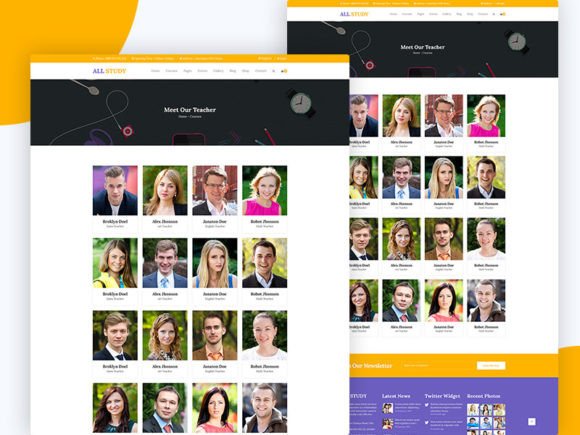
17.ALL Study- Education PSD Template: A Strategic Asset for Academic Web Design
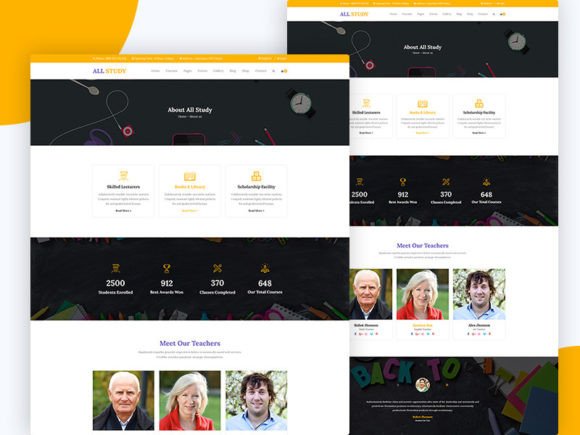
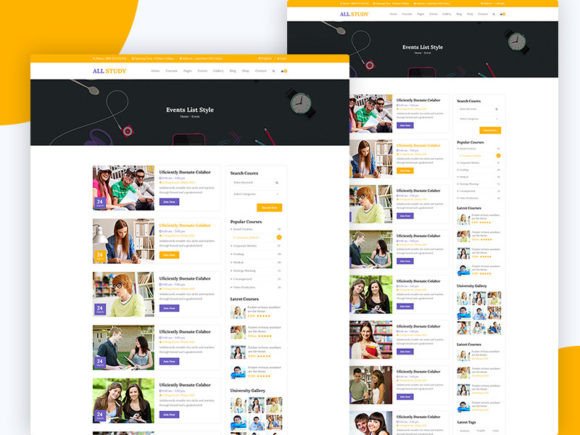
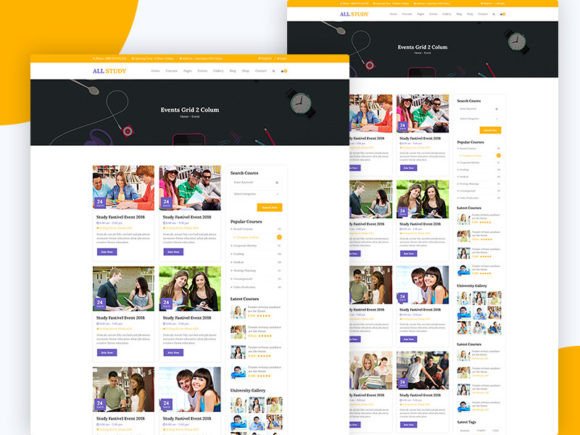
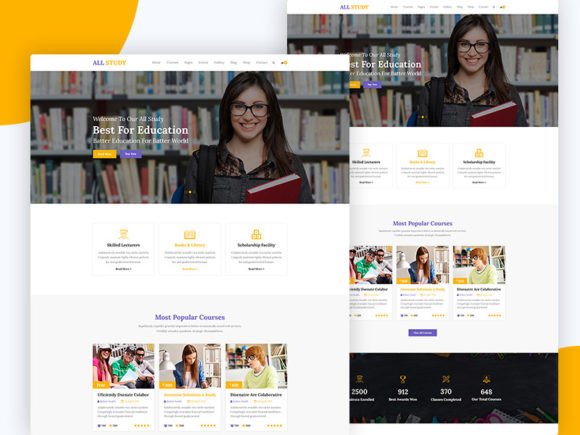
In the competitive landscape of digital education, the visual presentation of an institution often dictates its perceived credibility before a single syllabus is reviewed. The 17.ALL Study- Education PSD Template serves as a foundational tool for designers and project managers aiming to launch professional educational websites efficiently. Unlike generic templates that require extensive customization from scratch, this resource provides a structured, modern aesthetic tailored specifically for the nuances of academic environments. Whether you are managing a kindergarten enrollment drive, a university research portal, or an online tutoring platform, this template offers a responsive framework that aligns with current web design standards.
Understanding where this asset fits within a broader development workflow is crucial for maximizing its value. It is not merely a static image file but a strategic component in the pre-production and prototyping phases of web development. By integrating the 17.ALL Study- Education PSD Template early in the planning stage, teams can visualize layout hierarchies, test color schemes against brand guidelines, and validate user experience flows before writing a single line of code. This approach reduces revision cycles and ensures that the final product meets both aesthetic and functional requirements.
Positioning the Template Within the Design Workflow
The utility of the ALL Study Multipurpose Education PSD Template extends across various stages of a project lifecycle. In the initial discovery phase, stakeholders often struggle to articulate their vision through text alone. High-fidelity mockups provided by this template allow educators, administrators, and marketing directors to see a tangible representation of their digital presence. This visual clarity accelerates decision-making processes regarding navigation structures, content placement, and call-to-action positioning.
During the execution phase, the template acts as a precise blueprint for developers. Because the design is built with responsiveness in mind, it translates complex layout decisions into actionable specifications. Developers can reference the layered Photoshop files to understand spacing, typography scales, and interactive states. This direct handoff minimizes miscommunication between design and development teams, a common bottleneck in web projects. Furthermore, the modular nature of the design allows for easy adaptation if specific sections need to be reworked based on client feedback during the mid-project review.
Post-launch, the assets derived from the template continue to serve a purpose. The consistent style guide established during the design phase ensures that future updates, blog posts, or event pages maintain visual coherence. For institutions managing multiple sub-sites—such as separate portals for students, faculty, and alumni—the core design language provided by the 17.ALL Study- Education PSD Template ensures a unified brand identity across all digital touchpoints.
Pre-Project Preparation and Asset Organization
Before diving into customization, effective preparation is essential to leverage the full potential of the template. Begin by auditing your existing brand assets. Does your logo align with the modern, elegant look of the template? Are your primary colors compatible with the suggested palette? The template is designed to be flexible, but starting with a clear understanding of your constraints prevents wasted effort later.
Organize your content inventory alongside the template files. Identify the key information architecture required for your specific niche. A kindergarten website requires different focal points—such as safety policies, play-based learning highlights, and parent contact forms—compared to a high school site focusing on athletics, college prep, and course catalogs. Map these content needs directly onto the template's grid system. This mapping exercise reveals whether the default structure supports your goals or if significant restructuring is necessary.
Compatibility checks are also vital at this stage. Ensure your team has access to the latest version of Adobe Photoshop or compatible viewing software. Verify that all font licenses included or recommended in the template package are available for commercial use. Addressing these logistical details upfront streamlines the transition from concept to implementation.
Integration with Broader Digital Ecosystems
The 17.ALL Study- Education PSD Template does not exist in isolation; it must interact seamlessly with other tools and platforms to function effectively in a live environment. When moving from the PSD file to a live website, the design interacts with Content Management Systems (CMS) like WordPress, Joomla, or custom frameworks. The clean layer organization of the template facilitates this conversion, allowing developers to slice images, extract CSS properties, and build HTML structures with precision.
Consider how the design influences third-party integrations. Educational websites frequently rely on external plugins for student management systems, payment gateways for tuition, or video conferencing tools for online classes. The template's responsive layout ensures that these embedded elements do not disrupt the visual flow. For instance, a registration form powered by an external service should blend visually with the surrounding interface, maintaining the elegant aesthetic defined by the ALL Study design.
Furthermore, the template interacts with search engine optimization (SEO) strategies. While a PSD file itself is not SEO-friendly, the structural decisions made within it lay the groundwork for semantic HTML. Proper heading hierarchies, logical grouping of related content, and accessible navigation paths planned in the design phase translate directly into better crawlability and indexing once coded. Designers using this template should prioritize accessibility features, such as sufficient color contrast and scalable text, ensuring the final site meets WCAG guidelines.
Practical Implementation Strategies
To implement the 17.ALL Study- Education PSD Template effectively, adopt a modular customization approach. Rather than overhauling the entire design, focus on adapting specific modules to fit your unique context. If you are building a site for an online study program, emphasize the hero section and course listing grids. For a physical campus, prioritize map integration and event calendars. This targeted approach preserves the integrity of the original design while tailoring it to specific user needs.
Efficiency in the workflow is achieved by utilizing the template's built-in components. Use the pre-designed icons, buttons, and form fields as a starting point rather than creating them from scratch. However, avoid the trap of using every element simply because it is available. Ruthlessly edit the design to remove unnecessary clutter. A clean, focused interface is more effective for users trying to find admission deadlines or faculty directories than a crowded page filled with decorative elements.
Quality control is paramount throughout the process. Conduct regular reviews at key milestones: after the initial branding application, after the mobile view adjustments, and before the final handoff to developers. Check for consistency in spacing, font weights, and color usage across all pages. The "elegant and modern look" promised by the template relies heavily on strict adherence to these design principles. Any deviation can dilute the professional appearance of the site.
Long-Term Usability and Scalability
Investing in a robust template like the ALL Study Multipurpose Education PSD Template yields long-term benefits beyond the initial launch. As educational institutions grow, their digital needs evolve. The scalability of this design allows for the addition of new sections without compromising the overall aesthetic. Whether adding a new department page, a research archive, or a student portal, the underlying grid and style guide provide a stable foundation for expansion.
Maintain a master copy of the original PSD files alongside your customized versions. This practice ensures that if a major redesign is needed years down the line, you can revert to the base structure or compare changes against the original intent. It also simplifies the onboarding of new team members who may need to update the site later. Clear documentation of any deviations from the standard template should be kept within the project repository.
Finally, consider the human element of the workflow. The template serves as a communication bridge between non-technical stakeholders and technical teams. Its visual clarity helps educators and administrators feel confident in the digital representation of their institution. By facilitating a smoother collaboration process, the 17.ALL Study- Education PSD Template contributes to a more cohesive project culture, where everyone understands the visual goals and works toward a unified outcome.
In summary, the 17.ALL Study- Education PSD Template is more than a design file; it is a strategic instrument for planning, executing, and scaling educational web projects. By integrating it thoughtfully into your workflow, respecting its structural strengths, and customizing it with purpose, you can deliver a high-quality digital experience that serves students, parents, and staff effectively. The result is a website that not only looks modern and elegant but functions as a reliable tool for achieving institutional goals.